Canadian Human Dimensions Directory
Connecting HD Practitioners and Researchers

Purpose
The purpose of this directory is to provide a shared resource that government agencies and departments, non-governmental organizations, academics, and practitioners can use to find people with human dimensions expertise in Canada.
Background
Increasingly, the conservation of natural resources in Canada has incorporated human dimensions (HD) approaches to inform planning and management decisions and strategies about wildlife, ecosystems, resource use, and people’s interactions with natural places.
Human dimensions approaches can be thought of as applied social science. The term human dimensions refers to how and why humans value natural resources, how humans want resources managed, and how humans affect or are affected by natural resources management decisions. Human dimensions inquiries strive to understand human traits and how to incorporate that understanding into management planning and actions. It covers a variety of ideas and practices including cultural, social, and economic values; individual and social behaviour; demographics; legal and institutional frameworks of management; communication and education; and, decision-making processes of management (Decker, Brown & Siemer, 2001). The idea for this directory was initiated by the North American Waterfowl Management Plan (NAWMP).
The first step is to identifying social science and human dimensions researchers and practitioners who have shared interests in conservation. Enter your own information by following the link below or you can also search the directory to find others with the skills and expertise needed to incorporate applied social science approaches into your work.
Funding provided by
North American Waterfowl Management Plan Context
The 2012 revision of the North American Waterfowl Management Plan (NAWMP) solidified three goals that are fundamental for the successful management of waterfowl and their habitats. Goal 3 seeks to increase public support for waterfowl and wetlands conservation:
Growing numbers of waterfowl hunters, other conservationists, and citizens who enjoy and actively support waterfowl and wetlands conservation.
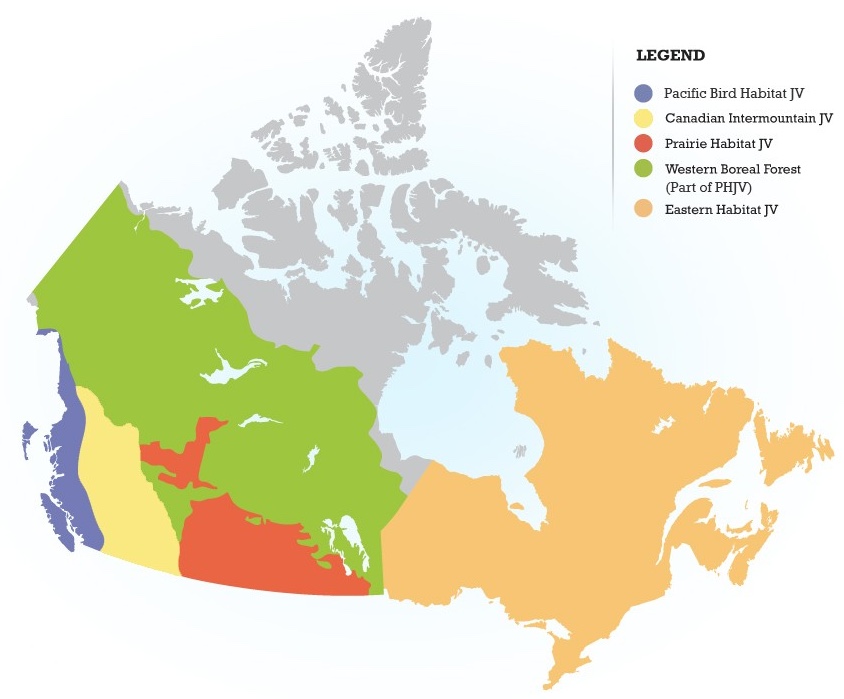
To facilitate this growth of support, the Canadian Joint Ventures (the Prairie Habitat Joint Venture, the Canadian Intermountain Joint Venture, and the Pacific Bird Habitat Joint Venture) have identified strategic outcomes and have prioritized actions and projects that support NAWMP Goal 3. To realize these outcomes, it will be necessary to increase engagement with applied social science researchers and practitioners across Canada.
The Prairie Habitat Joint Venture (PHJV) has identified the need to increase the social science capacity to inform decisionmaking as a Strategic Outcome:
The PJHV and delivery partners have the social science capacity required to support a human-centric approach to decision-making and conservation support.
The first step in realizing this social science capacity is identifying existing and potential social science (and human dimensions) researchers and practitioners who have shared interests in bird and bird habitat conservation.